
Buyer Guide
Practical information for
MDF purchasing decisions.
MDF manufacturer · Wen'an, Hebei, China
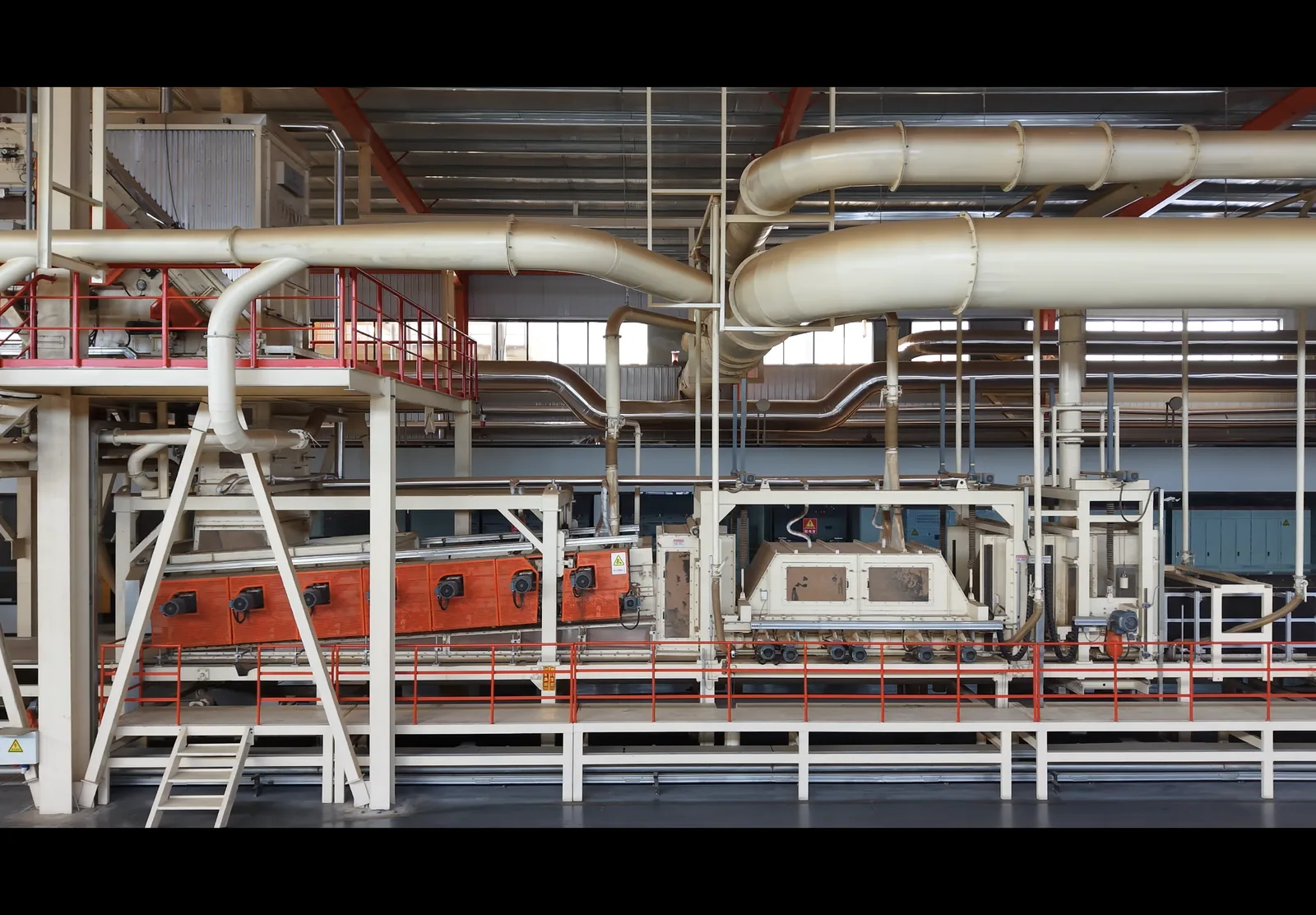
Thin MDF production converts prepared wood fibres into a uniform board that can be cut, laminated or processed into downstream components. Buyers do not need to operate the equipment, but understanding the main stages helps them identify which controls affect thickness, density, bonding and surface condition.
Raw material preparation
Wood materials are prepared according to the production requirements before fibre processing. Stable preparation supports a more controlled fibre furnish and reduces variation entering later stages.
The exact raw-material mix and processing settings depend on the factory and target board specification. Buyers should focus on whether the producer maintains repeatable input control for the agreed product.
Fibre processing
Prepared wood material is processed into fibres suitable for MDF production. Fibre condition influences forming, bonding and the structure of the finished board.
Production control at this stage aims to provide a consistent furnish for resin application and mat forming. Large changes in fibre preparation can contribute to density or surface variation.
Consistent fibre preparation
Controlled material flow
Settings matched to the product specification
Mat forming
Processed fibres are distributed into a continuous mat before pressing. Even forming is important because the mat becomes the internal structure of the MDF board.
Control of material distribution supports uniform density across the board width and reduces local variation that may affect cutting or downstream processing.
Continuous pressing and thickness control
The formed mat passes through a continuous press where heat and pressure consolidate the fibres into board. Press settings are adjusted according to thickness, density and other production requirements.
For thin MDF, stable press control is especially important. Thickness is monitored during production, and measurements are checked against the confirmed order specification.
Press settings for the target board
Continuous thickness monitoring
Density and board-structure control
Adjustment when measurements move outside requirements
Cutting, conditioning and inspection
After pressing, boards are cut to specification and prepared for inspection and packing. Finished-board checks may include thickness, density, moisture content, internal bonding performance, bending strength and surface condition.
Inspection requirements should be agreed with the buyer. The purpose is to confirm that the finished board and packaging are suitable for the intended processing and transport conditions.
Packing and shipment preparation
Finished boards are protected as bundles to reduce damage during handling and international transport. Packing details depend on board thickness, order quantity and customer requirements.
The final release should confirm board specification, bundle identification, packaging condition and shipping arrangements before loading.
Related MDF Keywords
Specification-focused
buyer research.
Need help selecting a thin MDF specification for your production?
Send your application and requirements
for factory review.
Request Specification & Quotation Related MDF Knowledge
Continue your
buyer research.
Guidance for specifying, inspecting and sourcing thin MDF from China.
Thin MDF Thickness Guide
Compare Xinyao thin MDF thickness options from 0.8mm to 5.8mm by application, processing review, density, surface and inquiry requirements.
Read articleMDF Density Guide
Learn how to select MDF density by thickness, machining, surface processing and application, using Xinyao's verified density options for buyer review.
Read articleMDF Thickness Tolerance Guide
See how MDF thickness tolerance is measured and specified, plus representative 0.8mm batch results and a practical buyer inspection checklist.
Read article